Showing posts with label education support. Show all posts

Wednesday, March 20, 2013

Whole Foods and Safeway Named to World's Most Ethical Companies List


Food supermarkets Whole Foods Market and Safeway are leading proponents of corporate social responsibility. Individually, they've instituted philanthropic programs such as Whole Planet Foundation, which creates economic opportunity for food producers in developing countries, and the Safeway Foundation, which supports charitable efforts toward hunger relief, education and assistance for people with disabilities. Now, they've officially been named among 2013's World's Most Ethical Companies.

The designation is courtesy of Ethisphere Institute, a think tank dedicated to advancing best practices in business ethics, anti-corruption and sustainability. For the past seven years, it annually selects companies in a variety of industries for its official list. Company executives, industry peers, suppliers and customers nominate businesses, which are then evaluated by Ethisphere for investment in sustainable practices, codes of ethics and corporate citizenship activities. This year 145 companies were named from three dozen industries including retail, insurance, aerospace and alternate energy.

Other food companies named to Ethisphere's 2013 list include Starbucks, UK's Marks and Spencer and New Zealand's All Good Organics. The list is published in the current issue of the quarterly magazine Ethisphere and is available here.

Tuesday, March 12, 2013

Hugh Can Help: Coffee That Supports Education

Actor Hugh Jackman has added chocolates to his philanthropic-driven line Laughing Man Coffee & Tea. Inspired by companies like Newman’s Own, Jackman donates profits from the beverages and chocolates to benefit educational initiatives. The food company has partnered with Harlem Village Academies, a charter schools in New York, and WorldVision, an organization that works with children and families worldwide facing poverty or social injustice.

Monday, March 11, 2013

A Chocolate Bar With a Social Conscience


Working for 20 years as a defense attorney gave Shawn Askinosie decades to work on social justice issues. But when the time came for a career change, he knew his next move would involve two things: artisanal chocolate and serving the community. He launched Askinosie Chocolatehis specialty food company in 2007, and today he directly trades with cacao farmers across four continents and shares with them profits from the chocolate made with their beans. He also works with the farmers on post-harvest techniques and pays above the rate of fair trade prices.

Shawn Askinosie
Askinosie has been named “One of 14 Guys Who Are Saving the World” by O, The Oprah Magazine and awarded an honorary doctorate in public affairs from Missouri State University in recognition of his contributions.

Creating a new business model, however, has its challenges. “We’re swimming against the current of traditional business practices that thinks philanthropy must be separate from the core business,” he says. “But it’s more fulfilling this way, it’s more fun and the people that are in your organization find it more rewarding to focus on something bigger than profitability.”

Today, Askinosie Chocolate has 500 retail accounts with about 20 products—many of them award winners—including single-origin chocolate bars, white chocolate bars, chocolate nibs, baking ingredients and bulk items.

From the beginning Askinosie has looked for ways to educate people about his social passions. He started Chocolate University to inspire and educate local Springfield students about social entrepreneurship and the world. Recently, he brought a group of high-school students to Tenede, Tanzania, where they met with cacao farmers and worked on a self-sustaining school-lunch effort and assisting in implementing a video learning program on laptops and projectors. Chocolate University funded the first computer teacher, the first textbooks and a deep-water well for the village, and implemented the Empowered Girls club, aimed at increasing the retention and graduation rate of female students.

As a way to combat hunger, Askinosie Chocolates partners with parent-teacher associations in the countries where he sources his beans to create products to support local school-lunch programs. A great success is Tableya, a traditional Filipino hot chocolate beverage tablet created by the PTA members in the local community where he sources his beans. The profit from the product provides 185,000 lunches to kids who would otherwise go hungry. “We’re expected to get a new shipment of Tableya soon that will allow us to move to phase two of that program, which is supporting locally sourced foods and local economies,” he adds.

Buffalo Meat Helps Native American Group Revitalize Their Community


On the Pine Ridge Reservation in South Dakota, 90 miles from the nearest city and the third poorest county in the U.S., a Native American community is revitalizing their nation by returning to their roots.
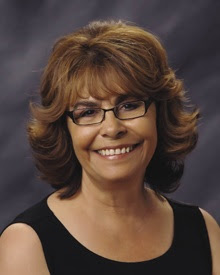
Karlene Hunter
Karlene Hunter, a member of the Oglala Sioux Tribe, has spent more than 25 years working on educational and economic development on the Pine Ridge Reservation, an area with steep unemployment and rampant obesity. In 2007, Hunter and her business partner Mark Tilsen started Native American Natural Foods, a food company that produces a line of buffalo snacks made on the reservation, including Tanka Bar, Tanka Bites, Tanka Dogs and Tanka Wild. Their goal was to build a national brand strong enough to improve the diets, economy and lives of the 35,000 tribal members.

“More than 100 years ago, the Lakota Indians were put on this reservation and our whole way of life was taken away,” Hunter says. “The buffalo provided our economic needs. In order to revitalize our culture, we had to revitalize who we were and where we came from.” She continues: “We looked at all the land around us and thought, Why aren’t we using this?”

They started by creating a snack bar based on a traditional Native American food called wasna, a pounded mix of dried buffalo meat and berries. “People said you have to use phosphates. Our people never did. We hit on how we can do it naturally by going back to our roots and relying on our buffalo nation again—on what we knew made us a strong, vibrant culture. Then we revamped it to today’s society,” Hunter explains. The buffalo are raised on open grassland, and there is no use of low-level antibiotics, hormones, drug residues or preservatives.

To date, the food company has created 18 fulltime positions, educated hundreds of young people about the history, sustainability and health benefits of lean buffalo, and put hundreds of thousands of dollars back into the Native American community through the purchase of buffalo meat.

“These are career positions. These aren’t lower level jobs,” Hunter asserts. And each job has a ripple effect. “When you come from 70 percent unemployment, one job makes a huge dent in your community. We have ladies that are employed here who then hire babysitters. We’re turning the dollar over more than once.”

They’ve also created the Tanka 501c3, a charitable fund that allows consumers to directly support programs and activities that will help return buffalo to the Great Plains and bring renewed health and opportunity to Native-American communities. “We didn’t create this business to get rich. We’re really trying to change our situation, our economy,” Hunter says. “We’re rising to where we began as a strong nation.”