Showing posts with label business philosophies. Show all posts

Tuesday, June 25, 2013

A Christmas (Milk) Story


Heidi and Shane Fausel's eggnog isn't typical; it's Christmas Milk. And the story of how it got its name could warm the most frozen heart. It starts with a request from an eight-year-old boy, their first of four adopted children.


Today, Christmas Milk is a thriving business. The seasonal product has won fans for its rich taste as well as gluten- and hormone-free attributes. Inspired by the eggnog, which tastes a lot like melted French vanilla ice cream, the company also recently launched an ice cream line at the Summer Fancy Food Show in New York. The new frozen treats are available in three introductory flavors: Original French Vanilla Eggnog, Caramel Swirl, and Chocolate Swirl.

But remembering their company's origins is at the core of the Fausels' mission. The owners donate a portion of Christmas Milk sales each year to groups that help children in state care programs find their forever home, in particular Gladney Center for Adoption, a 100-year-old organization that supports children awaiting adoption, adoptive families and women planning adoption. Watch Heidi explain more about these efforts.


Saturday, May 11, 2013

Wine That Lets Shoppers Choose a Charity with Each Purchase

I was in Toronto last week for a conference where I picked up a Canadian magazine I don't usually read, Foodservice & Hospitality. It turned out to be worth it when it introduced me to a Toronto wine company, The Little Grape That Could, that donates all profits to a charity of the buyer's choice. Here's how it works: The company recently introduced a Cabernet Sauvignon and a Torrontes that retail for $11.95 at select retail stores in Canada. Buyers can log onto the winery's website and donate the profit from the sale of the wine they purchase to a list of charities.

The magazine writes that the idea came from TLGTC founder Brett Preston's blate father, who told him to ask himself, why raise funds for a single cause when there are so many worthy causes? As an added touch, each wine bottle celebrates a person on the back label; buyers can nominate their own choices. I love that idea alone, as well as the whole concept of letting shoppers pick their own charity to support as they make their purchase.

Wednesday, April 24, 2013

Confections Shop Turns Youth with Criminal Records into Chocolate Makers

confections with convictions

Dale Anderson created his livelihood around employing the hard to employee. When he conceived the idea of Confections With Convictions, his Kalamazoo, Mich., chocolate shop, he was not only highlighting his use of premium sustainable ingredients. The name also refers to his commitment to hiring youth who may not be able to find work elsewhere due to their criminal records. Today, his four employees all have felony records.

Anderson was a licensed professional counselor and a mediator in the court system since 1996, but he wanted to do more. A taste of artisan chocolate and a few classes later and an idea was born. "Many of the juveniles I counsel are kinetic learners. They sit there taking apart the stapler on my desk while we are in a counseling session. They need to be moving, doing things while learning," says Anderson, who maintains that court-ordered counseling ends up deeling like more punishment. "No matter how well-meaning, it's a system that is deficit-based, not strength-based."

Anderson's convictions extend globally as well and are engrained in his business practices. He sources chocolate from Ecuador and Peru rather than other countries where child labor is used. "We use organic and fair trade chocolate because if we are trying to help youth here, we don't want to abuse youth elsewhere," Anderson says.

Wednesday, March 20, 2013

Whole Foods and Safeway Named to World's Most Ethical Companies List


Food supermarkets Whole Foods Market and Safeway are leading proponents of corporate social responsibility. Individually, they've instituted philanthropic programs such as Whole Planet Foundation, which creates economic opportunity for food producers in developing countries, and the Safeway Foundation, which supports charitable efforts toward hunger relief, education and assistance for people with disabilities. Now, they've officially been named among 2013's World's Most Ethical Companies.

The designation is courtesy of Ethisphere Institute, a think tank dedicated to advancing best practices in business ethics, anti-corruption and sustainability. For the past seven years, it annually selects companies in a variety of industries for its official list. Company executives, industry peers, suppliers and customers nominate businesses, which are then evaluated by Ethisphere for investment in sustainable practices, codes of ethics and corporate citizenship activities. This year 145 companies were named from three dozen industries including retail, insurance, aerospace and alternate energy.

Other food companies named to Ethisphere's 2013 list include Starbucks, UK's Marks and Spencer and New Zealand's All Good Organics. The list is published in the current issue of the quarterly magazine Ethisphere and is available here.

Whole Foods Sets Deadline for GMO Labeling


Whole Foods Market has taken an unprecedented step in mandating food labeling. On March 8, the natural foods supermarket giant announced that by 2018, all products in its stores in the U.S. and Canada must be labeled if they contain genetically modified organisms, which have been manipulated through genetic engineering by introducing changes into DNA structure. This makes Whole Foods the first national grocery store to set a GMO labeling deadline.

The move comes at a time when interest is building in non-GMO products. According to a recent poll by The Huffington Post in partnership with YouGov, nearly 82 percent of Americans want labels for GMO food. During last November's elections, a mandatory labeling initiative known as Prop 37 was defeated in California, a move largely attributed to millions of dollars being spent against the measure by big corporations like Monsanto. Nearly 60 countries around the world have already banned or restricted GMOs.

The issue isn't without controversy. GMOs have proliferated the food supply across the world over the past 15+ years, with most corn and soybean crops using these organisms. Many in the food industry debate if there is adequate proof that GMOs pose any health or food safety concerns; the Food and Drug Administration says evidence is inconclusive. Proponents of GMOs argue that they are engineered to thrive in extreme weather and can help prevent crop shortages and global malnutrition.

In making the announcement, co-CEO Walter Robb said Whole Foods views the move as "putting a stake in the ground to support a consumer's right to know." The bottom line is really about giving shoppers the information they need to make informed choices. Clear and mandatory labeling on products is the most straightforward way to do this. Without it, consumers are in the dark as to the details of how the food they are purchasing is made.

Tuesday, March 12, 2013

Hugh Can Help: Coffee That Supports Education

Actor Hugh Jackman has added chocolates to his philanthropic-driven line Laughing Man Coffee & Tea. Inspired by companies like Newman’s Own, Jackman donates profits from the beverages and chocolates to benefit educational initiatives. The food company has partnered with Harlem Village Academies, a charter schools in New York, and WorldVision, an organization that works with children and families worldwide facing poverty or social injustice.

Monday, March 11, 2013

A Chocolate Bar With a Social Conscience


Working for 20 years as a defense attorney gave Shawn Askinosie decades to work on social justice issues. But when the time came for a career change, he knew his next move would involve two things: artisanal chocolate and serving the community. He launched Askinosie Chocolatehis specialty food company in 2007, and today he directly trades with cacao farmers across four continents and shares with them profits from the chocolate made with their beans. He also works with the farmers on post-harvest techniques and pays above the rate of fair trade prices.

Shawn Askinosie
Askinosie has been named “One of 14 Guys Who Are Saving the World” by O, The Oprah Magazine and awarded an honorary doctorate in public affairs from Missouri State University in recognition of his contributions.

Creating a new business model, however, has its challenges. “We’re swimming against the current of traditional business practices that thinks philanthropy must be separate from the core business,” he says. “But it’s more fulfilling this way, it’s more fun and the people that are in your organization find it more rewarding to focus on something bigger than profitability.”

Today, Askinosie Chocolate has 500 retail accounts with about 20 products—many of them award winners—including single-origin chocolate bars, white chocolate bars, chocolate nibs, baking ingredients and bulk items.

From the beginning Askinosie has looked for ways to educate people about his social passions. He started Chocolate University to inspire and educate local Springfield students about social entrepreneurship and the world. Recently, he brought a group of high-school students to Tenede, Tanzania, where they met with cacao farmers and worked on a self-sustaining school-lunch effort and assisting in implementing a video learning program on laptops and projectors. Chocolate University funded the first computer teacher, the first textbooks and a deep-water well for the village, and implemented the Empowered Girls club, aimed at increasing the retention and graduation rate of female students.

As a way to combat hunger, Askinosie Chocolates partners with parent-teacher associations in the countries where he sources his beans to create products to support local school-lunch programs. A great success is Tableya, a traditional Filipino hot chocolate beverage tablet created by the PTA members in the local community where he sources his beans. The profit from the product provides 185,000 lunches to kids who would otherwise go hungry. “We’re expected to get a new shipment of Tableya soon that will allow us to move to phase two of that program, which is supporting locally sourced foods and local economies,” he adds.

Helping Palestinian Farmers Create Livlihoods Through Fair Trade

Nasser Abufarha
When Nasser Abufarha, a native Palestinian who had been in the U.S. attending college, returned home to finish his doctoral research in 2003, he became preoccupied by the plight of Palestinian olive oil farmers. Oil prices had plummeted below costs and livelihoods were being hurt from lack of market opportunities. That’s when he shifted his focus from getting his PhD in cultural anthropology to founding the Palestine Fair Trade Association in 2004, working to empower small farmers through education and training. He also launched Canaan Fair Trade, a producing and exporting company that gives the farmers a direct link to the international market.

Abufarha developed the first internationally recognized standard for fair trade olive oil in the region with the belief that it would be a way to empower marginalized Palestinian rural communities caught in conflict. “We are invested in increasing crop yields for farmers, increasing quality so we increase the value return of the products they produce [and] the sustainability of the soil they produce from, and helping them navigate some of the social or political issues that may be limiting their potentials,” Abufarha explains.

Today the organization works with 1,700 farmers and 200 female producers, selling their fair trade products in 17 countries worldwide. Since the establishment of Canaan, the average price of Palestinian olive oil has more than doubled, and in 2008 Canaan Fair Trade broke ground on a new 32,000-square-foot, state-of-the-art olive-processing facility that employees 40 Palestinians and can commercialize the products of 3,000 to 5,000 farmers.

Palestinian woman makes couscous
In addition to supporting farmers from production to social and economic empowerment, Abufarha created programs like self-managed women’s co-ops focusing on products traditionally processed by women like sun-dried tomatoes, za’atar spices, couscous, capers and soap. Participation has increased from 15 to 200 women since 2007, providing income and connection to the community.

“These opportunities bring new avenues for women to enter the workforce and give them the skills to be income generators and engaged and participating citizens at the same time,” he observes. Abufarha has also created Canaan Scholarships, which provide an average of $60,000 per year for 10 full university scholarships to farmers’ children, as well as a microloan program that has formed 10 women-owned cooperatives to date. Factory workers at the plant reap the benefits as well. After 10 years of employment, staff is eligible to apply for a loan to start their own socially responsible business to solve a social problem.

Buffalo Meat Helps Native American Group Revitalize Their Community


On the Pine Ridge Reservation in South Dakota, 90 miles from the nearest city and the third poorest county in the U.S., a Native American community is revitalizing their nation by returning to their roots.
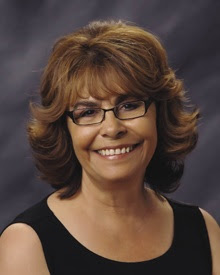
Karlene Hunter
Karlene Hunter, a member of the Oglala Sioux Tribe, has spent more than 25 years working on educational and economic development on the Pine Ridge Reservation, an area with steep unemployment and rampant obesity. In 2007, Hunter and her business partner Mark Tilsen started Native American Natural Foods, a food company that produces a line of buffalo snacks made on the reservation, including Tanka Bar, Tanka Bites, Tanka Dogs and Tanka Wild. Their goal was to build a national brand strong enough to improve the diets, economy and lives of the 35,000 tribal members.

“More than 100 years ago, the Lakota Indians were put on this reservation and our whole way of life was taken away,” Hunter says. “The buffalo provided our economic needs. In order to revitalize our culture, we had to revitalize who we were and where we came from.” She continues: “We looked at all the land around us and thought, Why aren’t we using this?”

They started by creating a snack bar based on a traditional Native American food called wasna, a pounded mix of dried buffalo meat and berries. “People said you have to use phosphates. Our people never did. We hit on how we can do it naturally by going back to our roots and relying on our buffalo nation again—on what we knew made us a strong, vibrant culture. Then we revamped it to today’s society,” Hunter explains. The buffalo are raised on open grassland, and there is no use of low-level antibiotics, hormones, drug residues or preservatives.

To date, the food company has created 18 fulltime positions, educated hundreds of young people about the history, sustainability and health benefits of lean buffalo, and put hundreds of thousands of dollars back into the Native American community through the purchase of buffalo meat.

“These are career positions. These aren’t lower level jobs,” Hunter asserts. And each job has a ripple effect. “When you come from 70 percent unemployment, one job makes a huge dent in your community. We have ladies that are employed here who then hire babysitters. We’re turning the dollar over more than once.”

They’ve also created the Tanka 501c3, a charitable fund that allows consumers to directly support programs and activities that will help return buffalo to the Great Plains and bring renewed health and opportunity to Native-American communities. “We didn’t create this business to get rich. We’re really trying to change our situation, our economy,” Hunter says. “We’re rising to where we began as a strong nation.”